
Industry Insights
2026 Manufacturing Industry Insights Report
Short summary
This report examines three changes affecting manufacturing in 2026: agentic AI and smart manufacturing, domestic reshoring amid trade-policy uncertainty, and changing workforce needs. It connects those trends to operational visibility, technology training, and the systems and support manufacturers need to adapt.
Key takeaways
- AI and automation can support predictive analytics, operational visibility, and aftermarket planning, with people retaining final approvals.
- Trade policies and tax incentives are factors manufacturers consider when evaluating domestic reshoring.
- Smart manufacturing requires workforce development alongside connected CRM, reporting, revenue operations, and talent management tools.
New technology, trade laws, and adapting workforces are all making waves in the Manufacturing Industry. Here's an overview of the changes affecting Manufacturing firms in 2026.
1. Agentic AI technology
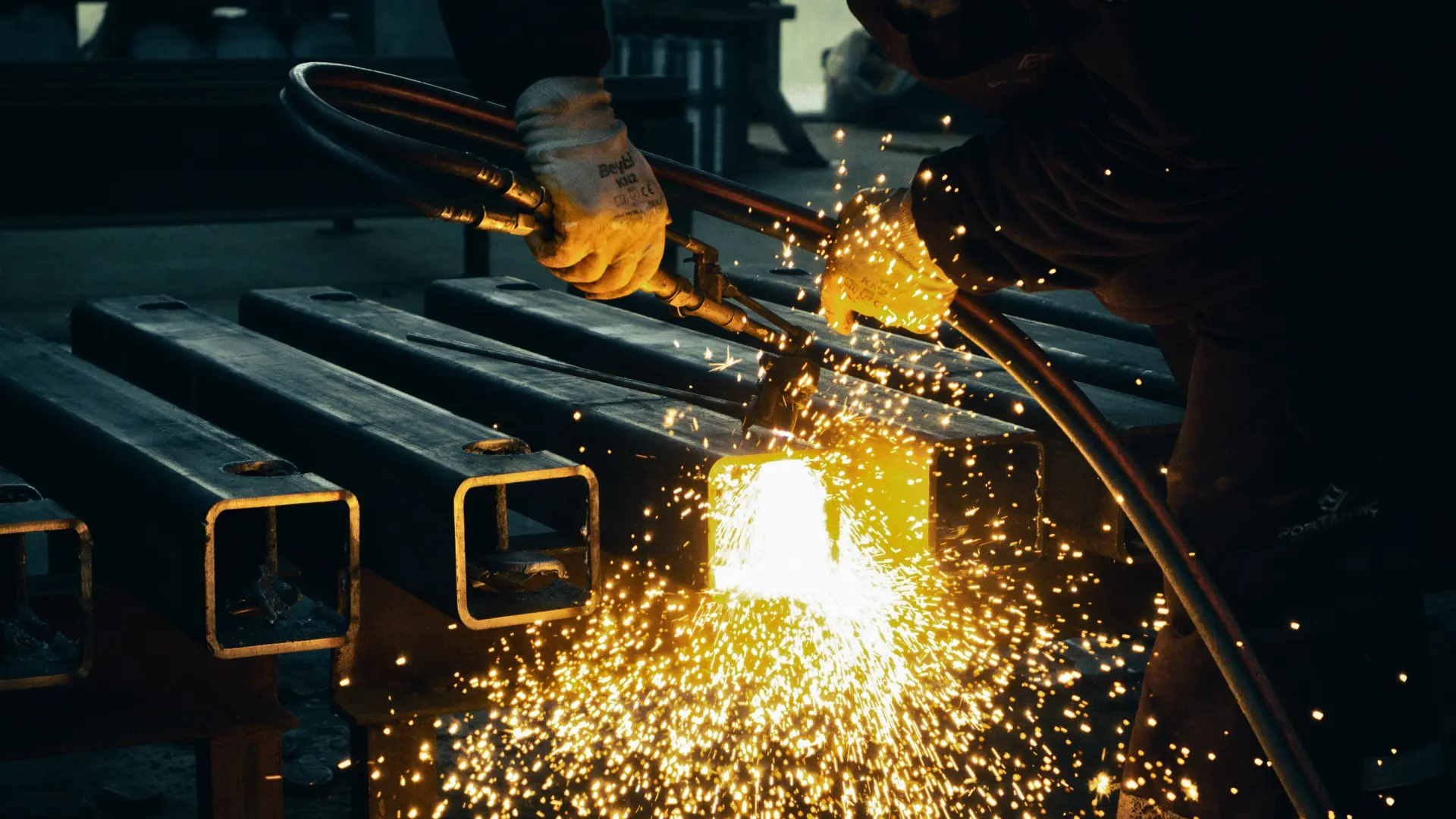
AI is being utilized in many ways, such as to increase operational agility and Aftermarket Systems. Operational agility will go from a competitive advantage to a requirement for survival with the volatile economy. Manufacturers are turning to AI and automation adoption for predictive modeling and analytics tools, assessing outcomes and risks, and increasing visibility in operations. "A 2025 Deloitte survey of 600 manufacturing executives found that the majority (80%) plan to invest 20% or more of their improvement budgets in smart manufacturing initiatives" (2026 Manufacturing). Some examples include 3D printing and automated metal cutting to reduce excess inventory and increase efficiency. Aftermarket services can deliver higher margins than solely equipment sales. Agentic AI can help with proactive planning, tracking data such as equipment usage, part delivery, evaluate warranty submissions, and adjust agreements based on risk, making humans only needed for final approvals on these tasks (2026 Manufacturing) ("The New").
2. Domestic Reshoring
Uncertainty around trade policies along with "The One Big Beautiful Bill" acts to encourage reshoring to the United States for manufacturing companies with overseas operations. Tariffs have increased on metal component imports, and a 25% tariff was placed on semiconductors from China. However, for companies with business in India, the U.S.-India Interim Trade Agreement is said to eliminate the 25% tariff increase from 2025. Also, there will be a 10% decrease on imports from China, and The United States-Mexico-Canada Agreement (USMCA) is under review in July 2026, with discussions about possible withdrawal, and possible new trade agreements in talks with UK and Vietnam.
So, there is much more security of future costs running in America, as OBBB grants 100% bonus depreciation, and scaling back the IRA’s energy-related credits will lead to a rise in investments now before those credits are unavailable ("The One") ("U.S. Tariff") ("[2026]"). "Made in America" may become a reality for many manufacturing companies due to these factors.
3. Changing Workforce
With rising operations in America and existing ones, executives are seeing the need to adapt workforce skills for the future of smart manufacturing. And as tensions rise with the current administration around undocumented workers, which according to The World Data, Manufacturing is the third largest industry for this demographic, and short supply of talent may require offering different hours and stimulate hiring incarcerated workers for grants to mitigate tighter immigration policies for undocumented workers ("Undocumented") (2026 Manufacturing) ("The New").
Overview
It's certain the Manufacturing industry will look much different in the coming years and companies must adapt for continued success. Increasing AI adoption will lead to faster lead times and overall visibility, changing customer expectations for the future. Firms may consider moving operations to the United States to access tax benefits and less volatility from trade policies. Skills required for the manufacturing workforce will include new technology training, and schedules may look different to attract new talent.
Adapting Your Business
These changes will be easier to implement with the right systems and support.
CRM implementation, Production Visibility tools, Power BI dashboards, Revenue operations, Talent management, and more will need to effectively serve Manufacturing firms with this transition. Xwurk is a growth and operations partner dedicated to helping align people, processes, systems, and data for scaling Manufacturing companies. If you need support taking the next steps to adjust operations for the future, let's chat.
References
2026 in Manufacturing: Policy Risks and Opportunities | Grant Thornton,
www.grantthornton.com/insights/articles/manufacturing/2026/2026-manufacturing-policy-risks-opportunities. Accessed 30 June 2026.
2026 Manufacturing Industry Outlook | Deloitte Insights,.5
www.deloitte.com/us/en/insights/industry/manufacturing-industrial-products/manufacturing-industry-outlook.html. Accessed 30 June 2026.
2026 Manufacturing Industry Predictions,
www.bdo.com/insights/industries/manufacturing/2026-manufacturing-industry-predictions. Accessed 30 June 2026.
The New Rules of Manufacturing in 2026 | IMI, www.global-imi.com/blog/new-rules-manufacturing-2026. Accessed 30 June 2026.
The One, Big, Beautiful Bill: Key Insights for Manufacturers | Our Insights | Plante Moran, www.plantemoran.com/explore-our-thinking/insight/2025/07/the-one-big-beautiful-bill-insights-for-manufacturers. Accessed 30 June 2026.
U.S. Tariff Updates 2025–2026: Latest Changes for Importers & Manufacturers - Fictiv, www.fictiv.com/articles/2025-u-s-tariff-updates-key-trade-policy-changes. Accessed 30 June 2026.
Undocumented Workers Statistics in US 2025 | Key Facts - the World Data,
theworlddata.com/undocumented-workers-statistics-in-us/. Accessed 30 June 2026.
[2025-07-25] the One Big Beautiful Bill Boosts Made-in-America Manufacturing | the United States Senate Committee on Finance,
www.finance.senate.gov/chairmans-news/the-one-big-beautiful-bill-boosts-made-in-america-manufacturing. Accessed 30 June 2026.
Frequently asked questions
What manufacturing trends does the 2026 report cover?
The report focuses on agentic AI technology, domestic reshoring, and a changing workforce. It explains how these trends affect operational visibility, planning, technology adoption, and workforce skills.
How can agentic AI support manufacturing operations?
The report describes AI supporting predictive modeling, analytics, proactive planning, equipment-usage tracking, parts delivery, warranty review, and risk-based agreements, with people responsible for final approvals.
What is domestic reshoring in manufacturing?
Domestic reshoring means bringing overseas manufacturing operations back to the United States. The report discusses trade-policy uncertainty and tax incentives as factors in that decision; the policy discussion reflects the sources accessed in June 2026.
How are manufacturing workforce needs changing?
As smart manufacturing expands, the report identifies a need for new technology training and adaptable workforce skills. It also discusses different schedules as a way to attract talent amid staffing constraints.
What systems can help manufacturers adapt?
The article identifies CRM implementation, production visibility tools, Power BI dashboards, revenue operations, and talent management as areas of support. These connect people, processes, systems, and data as manufacturing businesses adjust their operations.